
A cracked or root-filled sewer pipe used to mean one thing: an excavator in the backyard, a trench through the lawn and a big bill to put the pavers, garden or driveway back. These days, most damaged sewer pipes can be fixed from the inside instead. It’s called pipe relining, and it’s one of the jobs our team is proudest of.
Here’s how to tell if your sewer pipe is in trouble, how relining works, and when it’s the right call.
Signs your sewer pipe might be damaged
Sewer pipes are out of sight, so the first clues usually show up somewhere else:
- Blocked drains that keep coming back. If the same drain needs clearing every few months, there’s often a crack, a root intrusion or a sagging section causing it.
- Gurgling toilets or slow drains across more than one fixture in the house.
- A sewage smell in the yard or near an outdoor drain.
- Soggy, sunken or extra-green patches in the lawn above where the pipe runs.
- Tree roots. Roots go looking for moisture, and an old clay sewer pipe with tired joints is an easy target, especially on established Central Coast blocks.
If any of these sound familiar, the first step isn’t digging. It’s finding out exactly what’s going on inside the pipe.
Step one: look inside with a CCTV camera
We run a CCTV drain camera down the line to find the problem and see exactly where it is, how bad it is and what the pipe is made of. That footage is what tells us whether relining will do the job or whether a section needs to be dug up and replaced. No guesswork, and no digging holes to go looking.
How sewer pipe relining works
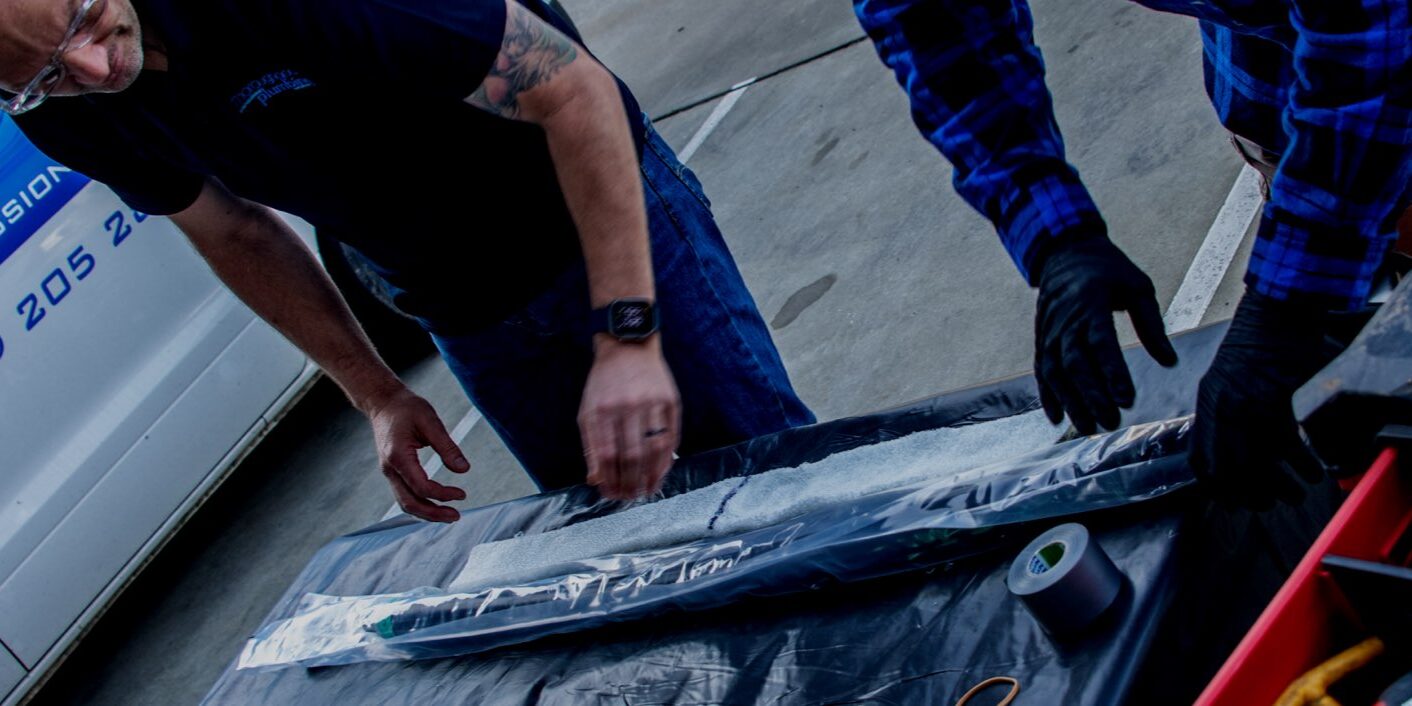
Relining puts a brand new pipe inside the old one. It sounds clever because it is. Here’s how we do it:
- Clean the pipe. High-pressure water jetting clears out roots, debris and build-up.
- Inspect it. The camera goes back in to confirm the damage and measure the section to be relined.
- Prepare the surface. The inside of the pipe is roughened so the liner bonds properly.
- Install the liner. A flexible liner soaked in resin is fed into the pipe, then inflated so it presses hard against the old pipe walls.
- Cure and reopen. The resin hardens into a seamless new pipe inside the old one. Once it’s cured, the pipe is back in use.
We use BRAWOLINER liners, a seamless textile liner that can handle bends and changes in pipe size. It’s a permanent repair, not a temporary patch that has you calling us back in six months.
Why relining beats digging
- No trenches through your yard. Paving, gardens, driveways, decks and tiled areas stay where they are.
- Faster. A typical reline is done in about four hours, and you can use your drains straight away. A full dig-and-replace can take days.
- Less restoration cost. With digging, the plumbing is often only part of the bill. Re-laying pavers, concrete, turf and tiles adds up fast. Relining avoids most of that.
- Seals out roots. Most root problems start at old pipe joints. A seamless liner has no joints for roots to work their way into.
- Works near trees. Some trees have protection zones where digging isn’t allowed. Relining gets around that.
A real Central Coast example
At Tina and Peter’s place in Green Point, water kept pooling on top of their paved outdoor living area. Our team tracked it down to a leaking pipe sitting under the concrete slab and tiled paving. Digging it up would have meant pulling up the whole entertaining area. Instead, we relined the pipe in about four hours, and the paving never had to come up.
Is relining always the answer?
Not always, and we’ll tell you straight. If a section of pipe has fully collapsed, or the pipe has sunk badly out of line, that part may need to be dug up and replaced before the rest can be relined. That’s exactly why we inspect first. You’ll see the camera footage and get an honest recommendation, not a sales pitch.
Relining for strata and commercial properties
In a strata building, one shared sewer line can serve a whole block, and digging it up can mean closing driveways, car parks or common areas. Relining keeps the disruption to a minimum, which matters when there are residents coming and going. Read more about who’s responsible for what in strata plumbing, or see our strata and commercial services.
Sewer Pipe Relining FAQs
What is sewer pipe relining?
Sewer pipe relining repairs a damaged pipe from the inside. A resin-soaked liner is placed inside the old pipe and cured in place, creating a seamless new pipe without digging a trench.
How long does pipe relining take?
A typical relining job takes about four hours, and you can use your drains as soon as we’re finished. A dig-and-replace job can take days, plus restoration.
Is pipe relining a permanent fix?
Yes. Relining is a permanent repair, not a temporary patch. The liner forms a seamless new pipe inside the old one, sealing the cracks and joints that caused the problem.
Can pipe relining fix tree root damage?
Yes, in most cases. We clear the roots first, then the seamless liner seals the cracks and joints that let roots in. If a section has fully collapsed, it may need to be replaced first.
How do I know if my sewer pipe needs relining?
Recurring blockages, gurgling drains, sewage smells and soggy patches in the yard are common signs. A CCTV drain inspection shows exactly what’s wrong and whether relining is the right fix.
Do you do pipe relining for strata buildings?
Yes. We reline shared sewer and stormwater lines for strata buildings and commercial properties across the Central Coast, keeping disruption to residents and common areas to a minimum.
Talk to a Central Coast pipe relining specialist
Thoroughgood Plumbing has been looking after Central Coast homes and businesses since 1949. If you’ve got a drain that won’t stay clear, roots in your sewer or a pipe under something you’d rather not dig up, we’ll inspect it, show you what we find and give you a clear quote before any work starts.
Call 0439 205 289 or book online. Learn more about our pipe relining service.